Elementary Science
Young children learn science best by living and exploring the world around them. Come and get some great resources, tips, and ideas for teaching elementary-aged children science and discovery.
Elementary Science Teaching Tips & Ideas
How I Teach a Large Family in a Relaxed, Classical Way: Science
Family style learning is a great way to tackle lots of different subjects, including science.
Things to See & Do in Utah
Pipe Spring National Monument
Pipe Spring National Monument, a little known gem of the National Park System, is rich with American Indian, early explorer and Mormon pioneer history. The water of Pipe Spring has made it possible for plants, animals, and people to live in this dry, desert region. Ancestral Puebloans and Kaibab Paiute Indians gathered grass seeds, hunted animals, and raised crops near the springs for at least 1,000 years. In the 1860s Mormon pioneers brought cattle to the area and by 1872 a fort (Winsor Castle) was built over the main spring and a large cattle ranching operation was established. This isolated outpost served as a way station for people traveling across the Arizona Strip, that part of Arizona separated from the rest of the state by the Grand Canyon. It also served as a refuge for polygamist wives during the 1880s and 1890s. Although their way of life was greatly impacted, the Paiute Indians continued to live in the area and by 1907 the Kaibab Paiute Indian Reservation was established, surrounding the privately owned Pipe Spring ranch. In 1923 the Pipe Spring ranch was purchased and set aside as a national monument. Today the Pipe Spring National Monument - Kaibab Band of Paiute Indians Visitor Center and Museum explains the human history of the area over time. Daily tours of Winsor Castle, summer "living history" demonstrations, an orchard and garden, and a half-mile trail offer a glimpse of American Indian and pioneer life in the Old West.
Rainbow Bridge National Monument
Rainbow Bridge is the world's largest natural bridge. The span has undoubtedly inspired people throughout time--from the neighboring American Indian tribes who consider Rainbow Bridge sacred, to the 300,000 people from around the world who visit it each year. Please visit Rainbow Bridge in a spirit that honors and respects the cultures to whom it is sacred. While Rainbow Bridge is a separate unit of the National Park Service, it is proximate to and administered by Glen Canyon National Recreation Area.
Bryce Canyon National Park
At Bryce Canyon National Park, erosion has shaped colorful Claron limestones, sandstones, and mudstones into thousands of spires, fins, pinnacles, and mazes. Collectively called "hoodoos," these colorful and whimsical formations stand in horseshoe-shaped amphitheaters along the eastern edge of the Paunsaugunt Plateau in Southern Utah.
Timpanogos Cave National Monument
Timpanogos Cave National Monument sits high in the Wasatch Mountains. The cave system consists of three spectacularly decorated caverns. Each cavern has unique colors and formations. Helictites and anthodites are just a few of the many dazzling formations to be found in the many chambers. As visitors climb to the cave entrance, on a hike gaining over 1,000 feet in elevation, they are offered incredible views of American Fork Canyon.
Cedar Breaks National Monument
A huge natural amphitheater has been eroded out of the variegated Pink Cliffs (Claron Formation) near Cedar City, Utah. Millions of years of sedimentation, uplift and erosion have created a deep canyon of rock walls, fins, spires and columns, that spans some three miles, and is over 2,000 feet deep. The rim of the canyon is over 10,000 feet above sea level, and is forested with islands of Englemann spruce, subalpine fir and aspen; separated by broad meadows of brilliant summertime wild flowers.
Capitol Reef National Park
The Waterpocket Fold, a 100-mile long wrinkle in the earth's crust known as a monocline, extends from nearby Thousand Lakes Mountain to the Colorado River (now Lake Powell). Capitol Reef National Park was established to protect this grand and colorful geologic feature, as well as the unique historical and cultural history found in the area.
Arches National Park
Arches National Park preserves over two thousand natural sandstone arches, including the world-famous Delicate Arch, in addition to a variety of unique geological resources and formations. In some areas, faulting has exposed millions of years of geologic history.The extraordinary features of the park, including balanced rocks, fins and pinnacles, are highlighted by a striking environment of contrasting colors, landforms and textures.
Utah's Hogle Zoo
Hogle Zoo in Salt Lake City provides an oasis for 1,100 animals, representing over 250 species from around the world. Also offers special exhibits and educational programs.
Zion National Park
Zion is an ancient Hebrew word meaning a place of refuge or sanctuary. Protected within the park's 229 square miles is a dramatic landscape of sculptured canyons and soaring cliffs. Zion is located at the junction of the Colorado Plateau, Great Basin and Mojave Desert provinces. This unique geography and the variety of life zones within the park make Zion significant as a place of unusual plant and animal diversity.
Dinosaur National Monument
Dinosaur National Monument protects a large deposit of fossil dinosaur bones--remains of the so-called "terrible lizards" that lived millions of years ago. The dinosaurs weren't really lizards, and most of them weren't even terrible. But some of the first dinosaur fossils ever found were huge bones and teeth, very lizard-like except for their size, and so the idea of monstrous lizards was born. Today, many ideas about dinosaurs are changing, and the fossils at Dinosaur National Monument continue to help us learn more about these fascinating animals. There is also more to Dinosaur National Monument than dinosaurs. The 210,000 acres within the park will grab your attention with its beauty, rugged wildness, solitude, and silence.
Tracy Aviary
The Tracy Aviary is located on 7.5 acres of land in the heart of Salt Lake City. Open to the public since 1938, the Tracy Aviary maintains a collection of approximately 400 birds representing about 135 species. Many of these birds are considered rare or endangered.
Canyonlands National Park
Canyonlands National Park preserves a colorful landscape of sedimentary sandstones eroded into countless canyons, mesas and buttes by the Colorado River and its tributaries. The Colorado and Green rivers divide the park into four districts: the Island in the Sky, the Needles, the Maze and the rivers themselves. While the districts share a primitive desert atmosphere, each retains its own character and offers different opportunities for exploration and learning.
Kennecott Utah Copper
Standing at the overlook within the Bingham Canyon Mine, you can see, hear, and feel the breathtaking and awesome magnitude of the largest man-made excavation on earth. While you watch the action in the mine, a descriptive narration recorded in several languages explains the operations. From the overlook, you can watch 240 and 320 ton capacity haulage trucks deliver copper ore to the in-pit crusher, where the material is reduced to the size of soccer balls before being loaded onto a five-mile conveyor that carries the ore to the Copperton Concentrator. Inside the large, modern Visitors Center are historic photographs, interactive exhibits, and three-dimensional models that provide an educational and entertaining experience for people of all ages. Finish your tour with a 14-minute video presentation that takes you into other Kennecott Utah Copper plant facilities to follow the production of copper from low grade ore in the mine, to 99.9 percent pure copper in the refinery.
Elementary Science Activities & Experiments
Arbor Day National Poster Contest
Join over 74,000 fifth grade classrooms and home schools across America in the Arbor Day National Poster Contest. The theme chosen will increase your students’ knowledge of how trees produce and conserve energy. The free Activity Guide includes activities to use with fifth grade students to teach the importance of trees in producing and conserving energy. These activities correlate with National Science and Social Study Standards. The Guide also includes all of the information you need for poster contest participation.
ExploraVision
ExploraVision is a competition for all students in grades K-12 attending a school in the U.S., Canada, U.S. Territory or a Department of Defense school. Homeschooled students are eligible to enter. It is designed to encourage students to combine their imagination with their knowledge of science and technology to explore visions of the future. Teams of students select a technology, research how it works and why it was invented, and then project how that technology may change in the future. They must then identify what breakthroughs are required for their vision to become a reality and describe the positive and negative consequences of their technology on society. Winning ideas have focused on things as simple as ballpoint pens and as complex as satellite communications. The student teams write a paper and draw a series of Web page graphics to describe their idea. Regional winners make a Web site and a prototype of their future vision.
Elementary Science Curriculum
Christian Kids Explore Chemistry
These user-friendly, unabashedly Christian, one-year science curriculums for elementary students include teaching lessons, coloring pages, hands-on time, memorization lists, review sheets, creative writing assignments, and a supplemental book list. The Chemistry text is intended for grades 4-8, and includes such hands-on activities as making model atoms, breaking covalent bonds, and making gas expand. It also lists chemistry terms, notations, and rules. The conversational style gives students the basic information they need, making this an ideal first course in life science, especially useful for those following a classical approach.
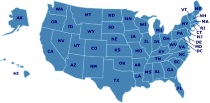
Looking for Another State?
Featured Resources
As an Amazon Associate, we earn from qualifying purchases. We get commissions for purchases made through links on this site.
A History of Science
A History of Science is not a textbook, but is a guide to help parents and children study science through literature. It is intended for children in elementary grades.

Black Books Galore's Guide to Great African American Children's Books
"This is a great resource that fills a tremendous need. It should be on parents' shelves at home as well as in every school." —Alvin F. Poussaint, M.D. Harvard Medical School These are exciting times for African American children's literature. Never before have there been so many titles available. Now the three mothers who founded Black Books Galore! —the nation's leading organizer of festivals of African American children's books —share their expert advice on how to find a...

Catholic Home Schooling: A Handbook for Parents
Mary Kay Clark, the director of the accredited and successful Seton Home Study School shows parents why and how to teach their children at home, giving scores of practical examples and setting forth the spiritual, moral and academic advantages. The book includes chapters by several experts and covers Catholic curriculum, textbooks, Catholic family life, legal aspects, discipline, socialization, home management, using computers, children with learning disabilities, single-parent home schooling, t...

Home Schooling from Scratch : Simple Living, Super Learning
Parents learn what they really need, how to find or create materials and opportunities for less money, and how to organize their household for economical, happy learning.
Greenleaf Press
Greenleaf Press is a small family-owned and operated publisher and supplier of quality books for children. They are committed to "twaddle-free", living books, and approach teaching history to children using biography and chronology. You will find sections in the catalog covering each major historical period in order, with a variety of biographies, reference books, and historical fiction. For Israel, Egypt, Greece, Rome, the Middle Ages, and the Renaissance and Reformation there are Greenleaf Stu...