Resources
Spell to Write & Read
This teacher's manual, written by a homeschool educator with experience as a professional school teacher and private tutor, shows how to teach reading the "write" way. By phonetically teaching spelling from the start as the backbone for reading, all children can be taught, regardless of learning styles, to read and spell. If your student knows how to read already, this program can improve his or her spelling. Find out more about this product here.
A Reason For® Spelling
A Reason For® Spelling combines the latest research on how children learn to spell with all the strengths of traditional programs. It teaches highfrequency base words, plus hundreds of other word forms. Values-based stories set the theme each week and help make spelling fun. You'll find product information about A Reason For® Spelling here.
Sing, Spell, Read & Write
Sing, Spell, Read & Write is a phonics-based program that uses a 36-step program of carefully sequenced steps to teach reading, writing, and spelling. More product information can be found here.
Learning Language Arts Through Literature
Learning Language Arts Through Literature is a fully integrated language arts program that teaches grammar, reading, spelling, vocabulary, writing mechanics, creative writing, thinking skills and more.
Spelling for the Homeschooled Student
Scripps National Spelling Bee
Scripps National Spelling Bee is the most widely known spelling bee organizer in the world. In general, the program is open to students who have not reached their 16th birthday on or before the date of the national finals and who have not passed beyond the eighth grade at the time of their school finals.
How to Teach Spelling in Your Homeschool
Homeschooling is a great opportunity because you can choose the homeschool spelling curriculum that matches your child's needs. As your child's teacher, you decide the method of instruction, how frequent the lessons are, the pace, the intensity, and the amount of review. No one else can do that for your child! For all children, from those needing remedial help to those who are gifted in this area, individualized spelling instruction is an unbeatable choice.
PBS Kids Spelling Games
Your kids can practice spelling with these online games.
How I Teach a Large Family in a Relaxed, Classical Way: Language Arts
Tips for teaching language arts (writing, grammar, handwriting) in a large family.
When Should I Start Teaching Spelling in Homeschool?
Spelling is more than just associating letters with sounds and deciphering them. Spelling is an essential element to writing clearly and convincingly. Some programs start testing children right away like at Kindergarten level. However, instead of teaching spelling, a program may add the element of testing.
Teaching spelling is one thing and testing spelling is quite another thing.
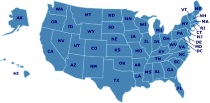
Looking for Another State?
Featured Resources
As an Amazon Associate, we earn from qualifying purchases. We get commissions for purchases made through links on this site.

Morning by Morning : How We Home-Schooled Our African-American Sons to the Ivy League
Home schooling has long been regarded as a last resort, particularly by African-American families. But in this inspirational and practical memoir, Paula Penn-Nabrit shares her intimate experiences of home-schooling her three sons, Charles, Damon, and Evan. Paula and her husband, C. Madison, decided to home-school their children after racial incidents at public and private schools led them to the conclusion that the traditional educational system would be damaging to their sons’ self-esteem...
Bob Books
Bob Books are organized into sets that progress in level as your child learns. They have cute stories and darling illustrations. These books are perfect for children ages 4 to 8.
Bob Books First! Level A, Set 1
Bob Books First! Level A, Set 2
Bob Books First! Level B, Set 2
Bob Books First! Level C, Set 1
TruthQuest History
The TruthQuest History series consists of ten volumes that serve as guides for parent wishing to use real books in their approach to history education. They are full of book recommendations, along with information on the topics of study. There are also writing exercises included in these texts.

Pattern Blocks and Boards
This set of 10 simply designed colorful wooden blocks and pattern boards includes 100 blocks in six different shapes and colors. They help develop shape recognition and spatial relationship skills. The contents store neatly in a durable wooden case. This games was awarded the Scholastic Parent & Child's 2004 "Top 22 Toys that Make Kids Think" award.

Classical Education & The Home School
Classical education is an idea whose time has come again. When parents see the failures of modern education, they look for better solutions and classical education is one that has been tested in the past and found to be good. For the Christian home educator, the classical education model is a path to joy and success.