The Legal Journey
Learn about the legal, social, political, and philosophical journey towards legal homeschooling in the United States.
The Legal Journey
Marking the Milestones: Historical Times
This timeline highlights the important milestones in the fight for homeschool freedom in the United States.
HSLDA: Our History
Although HSLDA has changed over the past 30 years—in terms of the size of our membership and staff and our physical location—our original vision and purpose remain unchanged. HSLDA exists expressly for the purpose of advocating family and freedom.
The Battle of H.R. 6
House Resolution 6 of 1994 was a reappropriations bill for the Elementary and Secondary Education Act (ESEA). Ordinarily such bills deal with public education and would have little, if any, impact on home educators. But that year, a few small wording changes affected thousands upon thousands of home schooling families, and resulted in over a million phone calls to Congress.
The Lessons of H.R. 6
For eight days in February, 1994, the home schoolers of this nation gave Congress a lesson on the power of grassroots politics it is not likely to forget. It began when an amendment was introduced to H.R. 6, an enormous education reappropriations bill, which would have required all teachers in America to be certified in each and every course they teach. (See article on “The Battle of H.R. 6.”) This provision would have encumbered public schools—especially small public high schools. It would have seriously interfered with America’s private schools. But for home schools, the provision was the political equivalent of a nuclear attack. America’s home schoolers astonished Congress with a political counterstrike that was quick, effective, massive, and decisive. There are three central reasons why the home schooling community was able to respond in this manner.
On the Edge of the 21st Century
The right to home school is based on two fundamental principles of liberty: religious freedom and parental rights. Whenever one of these two freedoms is threatened, our right to home school is in jeopardy. Here are the battles we think home educators will be facing as we enter the next century:
Colorado's Homeschool Law Turns Twenty: The Battle Should Never Be Forgotten
Beginning in the late 1970s, as parents became dissatisfied with the public education system, the modern homeschooling movement grew rapidly. The 1983 report, A Nation at Risk, confirmed some parents belief that their children were receiving a mediocre education in public schools. Research by John Holt and Dr. Raymond Moore encouraged many parents confidence in their ability to homeschool. Conflict between some Colorado public school districts and parents led to the adoption of a 1988 legislative bill that established guidelines for home education. A timeline of important events is detailed here.
A Fifteen Year Perspective
When Michael Farris and Michael Smith founded Home School Legal Defense Association in March of 1983, home schooling was just a tiny blip on the education radar screen. The concept of parents teaching their children at home was relatively obscure, and the families who chose to follow this non-traditional education route were fairly certain to face opposition from the educational bureaucracy and following legal entanglements, as well as from their own friends and family.
Homeschooling Is Legal: A Brief History of Home School Legal Defense Association
This article, written in 1998 on the fifteenth anniversary of Home School Legal Defense Association (HSLDA), chronicles HSLDA’s growth.
The Good, The Bad, The Inspiring
A look back at the history of the Home School Lega Defense Association with Michael P. Farris, J. Michael Smith, Christopher J. Klicka, and David E. Gordon. Hear about the early years of HSLDA, the way home schooling has changed, and some of their most memorable cases.
The Politics of Survival: Home Schoolers and the Law
Twenty years ago, home education was treated as a crime in almost every state. Today, it is legal all across America, despite strong and continued opposition from many within the educational establishment. How did this happen? This paper traces the legal and sociological history of the modern home school movement, and then suggests factors that led to this movement's remarkable success.
House Joint Resolution 05-1040
Recognition of April 8, 2005, as Home Education Day in Colorado.
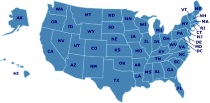
Looking for Another State?
Featured Resources
As an Amazon Associate, we earn from qualifying purchases. We get commissions for purchases made through links on this site.

Classical Education & The Home School
Classical education is an idea whose time has come again. When parents see the failures of modern education, they look for better solutions and classical education is one that has been tested in the past and found to be good. For the Christian home educator, the classical education model is a path to joy and success.

Name That Country Game
"Dear Pen Pal, Konnichi wa! We've been to see Mt. Fuji. Name my country! Sayonara, Michiko." Challenge your group with this fast-paced geography game, created in 1992 by Educational Insights, Inc. Everyone begins at the post office. Players twirl a finely printed spinner (built into the game board itself) to select one of 60 countries. If the player can correctly identify the country's location on the board's numbered map, he or she may advance along the path to the finish. Bonus moves are won b...

Morning by Morning : How We Home-Schooled Our African-American Sons to the Ivy League
Home schooling has long been regarded as a last resort, particularly by African-American families. But in this inspirational and practical memoir, Paula Penn-Nabrit shares her intimate experiences of home-schooling her three sons, Charles, Damon, and Evan. Paula and her husband, C. Madison, decided to home-school their children after racial incidents at public and private schools led them to the conclusion that the traditional educational system would be damaging to their sons’ self-esteem...

And What About College?: How Homeschooling Can Lead to Admissions to the Best Colleges & Universities
Get all your questions about helping your homeschooled student apply and get accepted to college answered with this resource. It discusses transcripts, diplomas, education choices, online colleges, and more. If you are worried about whether your homeschooled student can have a successful college search, then this book will help allay those fears and offers good support and information.

Great Lodges of the National Parks: The Companion Book to the PBS Television Series
Stand amid soaring Douglas fir in the great hall of Glacier Park Lodge or sit in the setting sun and gaze into the Grand Canyon at El Tovar. This beautiful gift book will transport you to the majestic lodges of our national parks to relive the glory of past vacations or plan adventures anew. This book and the PBS television series of the same title (to air in spring 2002) take armchair travelers into these architectural wonders and explore the surrounding natural beauty of our national parks. Lo...